Iran designates Argentina navy air force terrorist organizations, the foreign ministry in Tehran announced on Wednesday, in a measure presented as reciprocal and aimed at the South American country’s armed forces. The decision designates the Argentine navy and air force as terrorist organizations, and it deepens a dispute between the two countries that stretches back more than three decades.
The decision rests on the principle of reciprocity and on an Iranian law adopted in 2019, after the United States designated the Islamic Revolutionary Guard Corps, known as the IRGC, as a terrorist organization. That law gave Tehran a legal basis to respond in kind when other countries took similar steps against the IRGC, and the government has now used it against Argentina. The move follows a pattern that Tehran has applied before, answering a designation with a designation of its own. In practice, Iran designates Argentina navy air force terrorist organizations as a mirror image of the Argentine designation.
Why Iran designates Argentina navy air force terrorist organizations in response to Buenos Aires
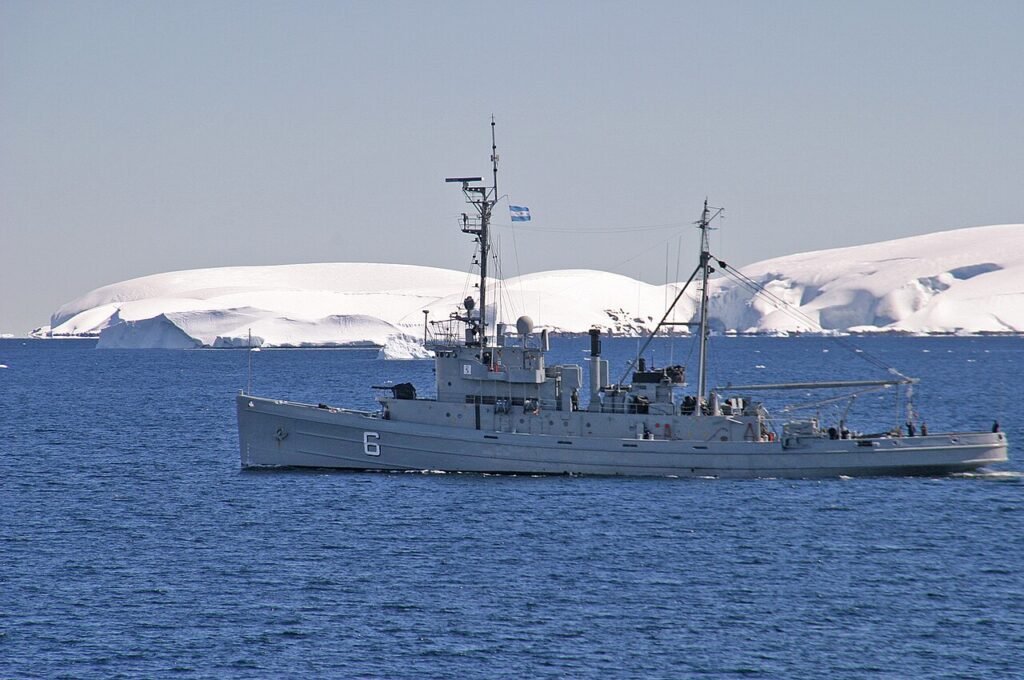
Argentina had designated the IRGC as a terrorist organization in April 2026, following pressure from the administration of United States President Donald Trump on its allies to do the same. The Argentine decision was part of a wider push by Washington to have partner governments list the IRGC, and Buenos Aires, under its current government, agreed. The move placed Argentina among the countries that have taken formal action against the Iranian force, and Tehran has now replied with a measure aimed at Argentina’s own military.
Buenos Aires had justified its measure by the IRGC’s alleged support for the Lebanese Hezbollah, held responsible for the 1994 bombing of the AMIA Jewish community centre in Buenos Aires, which killed 85 people and injured hundreds. The attack remains one of the deadliest in Argentine history, and the allegation that Iran and Hezbollah were behind it has shaped relations between the two countries ever since. Argentina has pursued the case for decades, and the designation of the IRGC was presented as part of that pursuit.
The Iranian ministry said that responsibility for all consequences arising from this affair will fall on the Argentine government, without specifying what those consequences might be. The army, the land force of Argentina, is not targeted by the measure, which covers only the navy and the air force. The distinction is notable, and it suggests that Tehran chose its targets deliberately, naming the two services while leaving the third untouched.
Tehran had taken a similar step on 1 November against the Royal Navy and the Royal Air Force of Britain, after measures by London against the IRGC. The British case followed the same logic, a reciprocal designation in response to a British action, and it shows that the Argentine measure is not an isolated gesture but part of a broader Iranian policy. When a government lists the IRGC, Tehran now answers by listing that government’s armed forces, or at least the naval and air branches. The pattern is clear: Iran designates Argentina navy air force terrorist organizations as part of a wider policy, not as an isolated step.
The IRGC is an elite military force that protects the Shiite clerical power in Iran and controls large parts of the Iranian economy. Its role goes beyond the military, extending into business, construction and other sectors, and its influence inside Iran is extensive. That breadth is part of why its designation by other countries carries weight, and why Tehran treats such designations as a serious challenge to its standing.
The Iranian designation has no specified practical consequences for now, but it worsens a dispute that is already decades old between the two countries around the Buenos Aires bombings. The practical effects of such a listing are often limited, since the designated forces have little direct contact with Iran, but the political signal is clear. Tehran is telling Buenos Aires, and other governments considering similar steps, that a designation of the IRGC will draw a response in kind. For now, the fact that Iran designates Argentina navy air force terrorist organizations carries mainly symbolic weight.
What Iran designates Argentina navy air force terrorist organizations means in West Asia
The dispute has its roots in the 1994 attack, and the years since have been marked by legal proceedings, diplomatic friction and periodic escalations. Argentina has sought the arrest of Iranian officials it accuses of involvement, while Iran has denied responsibility and accused Argentina of acting under pressure from others. The designation of the IRGC in April and the Iranian response now are the latest chapters in that long running confrontation.
For Argentina, the Iranian move is unlikely to change the daily operations of its navy or air force, which operate far from Iranian waters and have no dealings with Tehran. The significance lies instead in the diplomatic message, and in the precedent it sets. Other countries that have designated the IRGC, or are considering doing so, will note that Tehran is prepared to respond with the same tool, and will weigh that in their own decisions.
The Iran designates Argentina navy air force terrorist organizations decision is the latest turn in that cycle, and it leaves the dispute between Tehran and Buenos Aires in a worse place than before. The bombing of 1994 remains unresolved, the allegations remain contested, and the two governments are now exchanging designations rather than dialogue. The consequences, whatever they may be, will fall on a relationship that has already endured three decades of strain.
Source: Reuters